Much Ado About Nothing: Of Taverns and Taxis was a collaboration between the Durban University of Technology (DUT) and Eduvos, staged in September as part of the KwaZulu-Natal leg of the 2026 Shakespeare Schools Festival (SA). Directors Derosha Moodley and Verne Rowin Munsamy report on their experience.
DUT’s second year Performance Techniques students and the Eduvos Theatre Club joined hands to put on a KZN production of Much Ado About Nothing, that much-loved bromantic comedy about gendered worlds, revenge and entrapment.
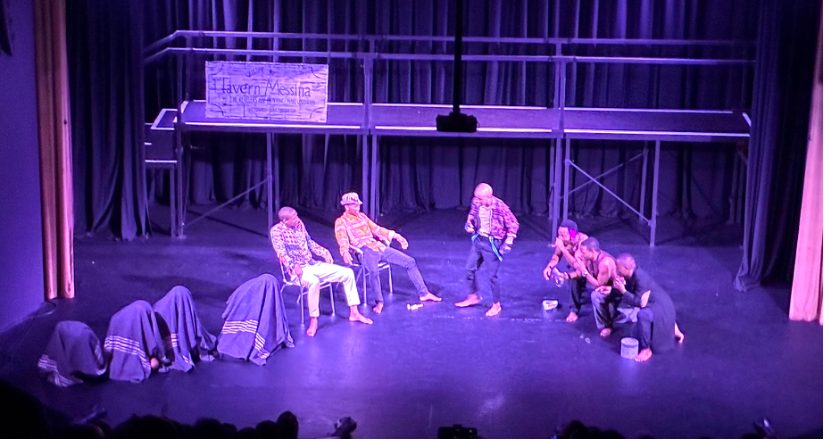
In our version, the play opened with Leonato being pampered by his waitresses, his brother Antonio at his side equally flattered by the ladies in their employ. Suddenly, excitement filled Tavern Messina, when news arrived of Don Pedro visiting with his full squadron from Aragon Taxi Association! The lights went down, a 3D taxi entered under a spotlight to the nostalgic sounds of TKZee’s “Shibobo” . . . and cue: roars, laughs, shrieks and chills! Thereafter, Claudio, Hero, Benedick and Beatrice occupied the DUT Courtyard theatre audience for the next one and a half hours’ traffic of the stage.
As directors, first and foremost, we wanted to locate the play’s world in a spatiotemporal context that our students were familiar with, so Taverns and Taxis it was. We felt that these icons in 2026 could represent the worlds of Leonato, Hero and Beatrice, and Don Pedro, Benedick, Don Jon and Claudio respectively. The costumes, music, behavioural mannerisms, colloquialisms and codeswitching between contemporary isiZulu and Shakespearean English throughout the play made the world of Messina familiar to our students and audience.
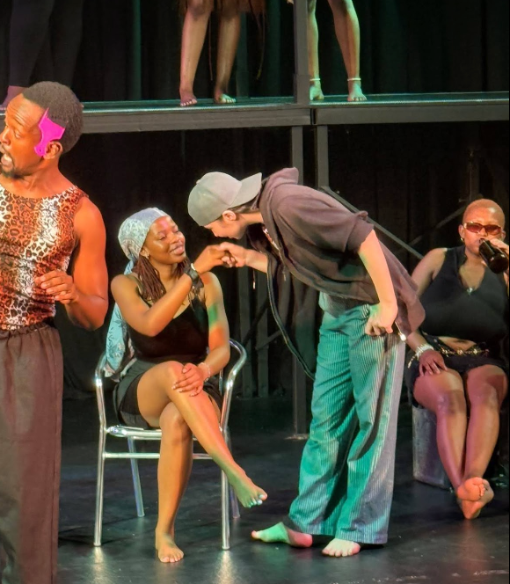
Our casting choices were colour-, culture- and gender-welcoming. Interesting adaptations (due to both ensemble limitations and cast member requests) included:
An Indian female Dogberry
A White female playing an isiZulu male Claudio
A tagati-poisoned Don Pedro and Claudio
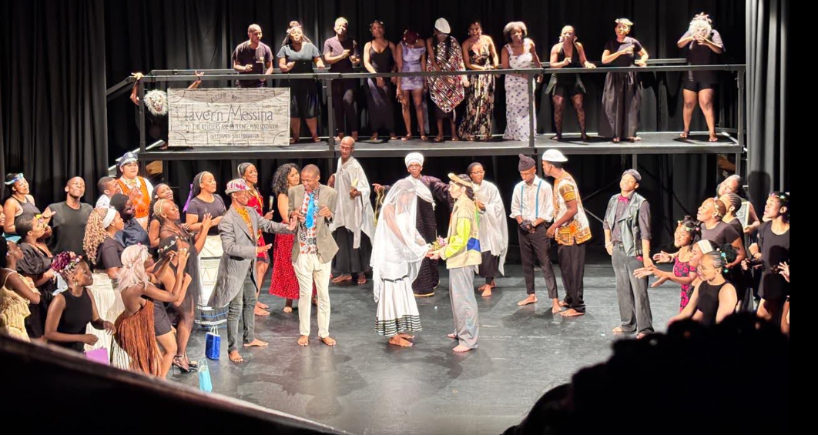
A new lobola scene with Don Pedro and Benedick leading the bridal negotiations on behalf of Claudio
A domestic helper as the Sexton
A sangoma who removed the illusion/spell which Don Pedro and Claudio were under
Gqom musical numbers that underscored the key celebrations on stage, from the masked ball to the wedding (including a finale dance number that was a Gqom/Indo fusion).
We sought to make the play relatable to the students first; this resulted in the audience following suit, as evidenced by their laughter, shock and awe-filled responses! The Eduvos students were exposed to a new syllabus (drama and performance), and were equipped with the skills to act, produce theatre, stage manage, and design A/V, lighting and sound, as well as valuable life skills like communication and critical thinking. They built interpersonal connections with a public institution and learnt about their voices, non-verbal behaviours and intrapersonal discoveries from this project. On the other hand, for the DUT Students, this was their first exposure to acting Shakespeare, including use of the vocal range, verse, and Shakespearean language. In turn, they got to perform with students from a private institution. The Performance Techniques module runs concurrently with the Acting 2B module, and both teach Shakespeare plays. Acting represents the text in a purist fashion while Performance Techniques looks at adaptations of the text.
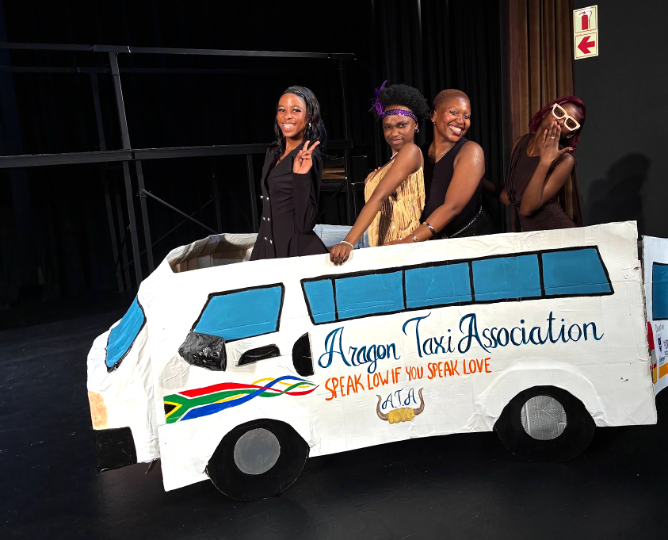
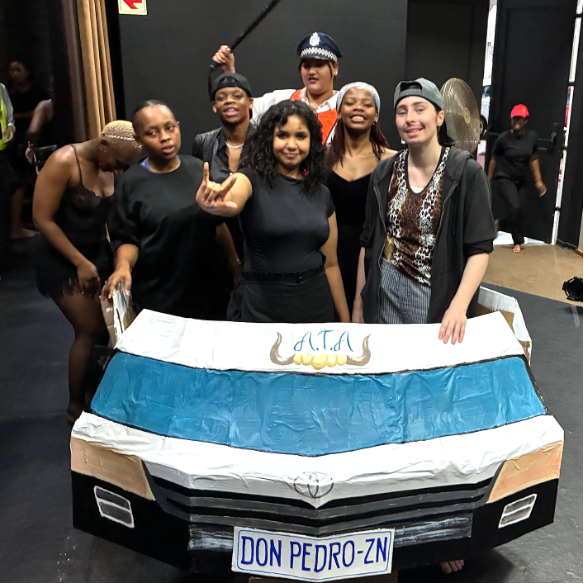
We chose Much Ado firstly because it was a comedy and, secondly, because through humour a more poignant message about gender-based violence in the community could be highlighted. The divisiveness of the gendered world Hero and Beatrice lived in was commented upon by many after the curtain call. At the end of each performance, the student actors playing Beatrice, Don Pedro, Hero and Antonio addressed the audience about their experiences with GBV in the play in comparison with real life South Africa. Hero gets another chance at life – but do South African women? The message was: “Don’t be the Leonato and Claudio, be the Beatrice and Friar who stood by Hero in her ‘supposed slander’.” Much Ado was an apt choice that served both the cathartic and social intentions behind this production.
Emma Smith says that “Shakespeare is waiting for us to make him our own . . . in the gappiness he provides”. We filled that gap with South African, Durban experiences. In the universe of the play there is a great deal of fuss over nothing because Hero is proven innocent and not guilty of adultery. This great deal of fuss, however, exposes something more sinister: when vulnerable people are targeted, who will stand for them and who will stand against them?