Speak Me A Speech at Woordfees

Two preview screenings in Stellenbosch during Woordfees 2023 will offer audiences a first look at a groundbreaking Shakespeare film project. Speak Me A Speech, the new film from Cape Town’s CineSouth Studios, produced in association with Wits University’s Tsikinya-Chaka Centre, is still in production, with shooting scheduled to continue to end 2024. The preview created by Speak Me A Speech director Victor van Aswegen for Woordfees from material filmed for the project to date gives a foretaste of the film.


The festival screenings are a rare opportunity for the public to get an early look into a forthcoming feature-length work still in production and meet the people behind the project. The Woordfees preview screenings, sponsored by EasyEquities, start at 2pm on Tuesday 10 and Friday 13 October in the Neelsie Cinema on the Stellenbosch campus, and are followed by Q&A with the director and producers Chris Thurman and Victor van Aswegen.

“With this project,” says van Aswegen, “We are bringing to life an astonishing 28 Shakespeare characters in 10 South African languages through 35 iconic monologues. But more than that: we are also presenting these characters reimagined as inhabitants of the modern-day world, speaking to us in a natural, colloquial, conversational style as contemporaries. And what they’re articulating are timeless human concerns. Transplanted to new and strikingly different contexts, these performances highlight multiple fresh nuances and variations on the familiar. But underlying all variety of history, culture, language and place, what shines through is a sense of hard unvarying human fundamentals being laid bare – movingly, pitch-perfectly, enlighteningly.”

The preview film screened at Woordfees features performances by celebrated actors Anelisa Phewa, Royston Stoffels, Chantal Stanfield and Buhle Ngaba, bringing to life in isiZulu, Afrikaans and Setswana four Shakespeare characters: Thomas More, John Falstaff, Mistress Page and Portia from the plays Sir Thomas More, The Merry Wives of Windsor, Henry IV Part II and Julius Caesar – the first time these characters, created by Shakespeare over four centuries ago, have been realised and presented on film in these languages. While the performance in Setswana draws from the near-century-old classic translation by Sol Plaatje dating from the 1930s, the other translations were created for the film – the isiZulu by actor Anelisa Phewa and the Afrikaans by director van Aswegen.

The Speak Me A Speech preview screenings at Woordfees are made possible by EasyEquities and supported by Business and Arts South Africa (BASA).


The five monologues in the preview film (Falstaff gets two) were selected for the wide range of topics, situations and emotions they cover. Old-age mischief-making for love and money, indignation at the receipt of an unwanted advance, and eloquent words on the manifold merits of sherry give us Shakespeare in light-hearted mode – in Afrikaans. A shift of tone takes us into the life and mind of a Setswana-speaking woman trapped in an unhappy marriage, and finally to an impassioned speech delivered by a Zulu leader to a violent, xenophobic mob.

As in the full-length film, the monologues in South African languages are punctuated by reflection in English on some of the material – in this case an extended sequence in which Anelisa Phewa shares some of the thinking underpinning his work on the translation and performance of the powerful speech by Thomas More.

All monologues filmed for the project are made publicly available on the web platform www.speak-me-a-speech.com, with user-selectable subtitle options (Shakespeare, the South African language being spoken, and the translation into contemporary English of the spoken language), and texts.


A Midsummer Night's Dream on tour

VR Theatrical’s A Midsummer Night’s Dream, directed by Geoff Hyland, ran to much acclaim at the Maynardville Open-Air Theatre in Cape Town in February this year. Now the production is back by popular demand, and will be touring to Stellenbosch and Durban in October and November.


Spring in Stellenbosch means only one thing: the Toyota US Woordfees! In 2023, festival-goers will have the chance to watch A Midsummer Night’s Dream at the Oude Libertas Amphitheatre from 9-13 October. Tickets via Quicket.

The production then moves to the Elizabeth Sneddon Theatre on the University of KwaZulu-Natal’s Howard College Campus in Durban, where it will run from 1-12 November. Tickets can be purchased via Computicket.

Schools in the area can arrange special rates - email alyssa@vrtheatrical.com for more information.


A Midsummer Night’s Dream welcomes three new cast members for this tour:

Sizwesandile Mnisi is an actor, singer, dancer, and writer who graduated from the University of Cape Town’s Drama School in 2015. He has since worked in both theatre and film, performing in Germany, Senegal, Scotland, the Royal Court in London, as well as New York and Washington DC. His South African theatre highlights include multi-award winning play The Fall and the role of Siya in Marc Lottering’s Aunty Merle - The Musical and Aunty Merle - It's A Girl.

Kylie Fisher is also a Theatre and Performance graduate from the University of Cape Town. Since her graduation in 2020, she has focused on film, debuting in Ridley Scott’s Raised by Wolves. She also starred in the Both Worlds series Recipes For Love and Murder and Showmax's Troukoors. Beyond her film work, Kylie teaches drama to children.

Caleb Swanepoel completes the UCT-trained trio. Alongside his film and stage acting career, Caleb is a keynote speaker, has represented South Africa in para-sport and worked in the tech industry. His most recent creative project is the short film And Yet, I Remain, which reflects on his experience of surviving a great white shark attack, where he lost his right leg, and his subsequent relationship with the ocean.


And finally: Maynardville fans will be pleased to know that it is now possible to book advance tickets for the 2024 production, Romeo and Juliet!


Play the Knave, Joburg: workshops for teachers

Gina Bloom (University of California, Davis) and Lauren Bates (Educasions) are no strangers to the Shakespeare ZA network! Bloom and Bates have been collaborating since 2020, developing resources, methods and materials to help South African high school teachers present Shakespeare’s plays to their learners.

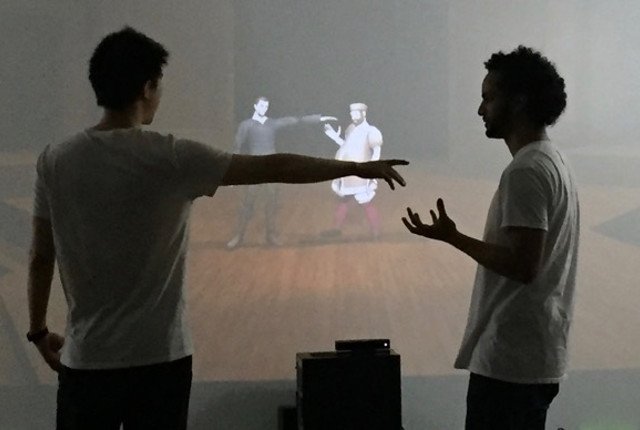
Play the Knave is a digital theatre game developed by Bloom and her UC Davis colleagues. It provides a new way for students to encounter Shakespeare, getting them up on their feet to design and perform scenes using avatars in a Mixed Reality (MR) format.


Bloom and Bates have previously introduced Play the Knave and related classroom practices to teachers and learners in Cape Town. Now schools in Johannesburg have the opportunity to discover the world where Shakespeare and gaming technology meet!

Gina Bloom

Lauren Bates

Two teacher workshops will be held in August:

  • On Saturday 5 August at Christ Church Preparatory School and College in Midrand

  • On Saturday 12 August at the University of the Witwatersrand in Braamfontein

Both workshops will run from 9:00-12:00, followed by lunch.


Watch this BBC News video to see Play the Knave in action

Workshop participants will try out a Play the Knave lesson and discuss how it can be adapted for their own classroom use. Four lesson options explore violence in Shakespeare’s tragedies and in students’ own communities, focusing on Romeo and Juliet, Macbeth, Hamlet and Othello.

There will be free, ongoing support for workshop participants who wish to implement these lesson plans, including the equipment required.

CLICK ON ONE OF THE FLIERS BELOW TO REGISTER !


Keynotes: Shakespeare Towards An End

We are excited to share with the Shakespeare ZA community two brilliant video resources from the recent “Shakespeare Towards An End” conference. The event, co-hosted by the Shakespeare Society of Southern Africa and the Tsikinya-Chaka Centre, was held at Spier Wine Farm from 24-27 May.

The keynote speakers were Ruben Espinosa (Arizona State University) and Jyotsna Singh (Michigan State University).


In his talk, “The Way To Dusty Death: Shakespeare and Tomorrow”, Espinosa interrogates how past uses of Shakespeare (all our yesterdays) have aligned him and his work with oppressive structures of power, before pointing to promising futures of Shakespeare through readings that underscore racial and other forms of justice and solidarity.


Singh’s talk, “Lyric Voices, Cultural Translations, and Dialogues across Time and Space: William Shakespeare and Faiz Ahmed Faiz (1911-1984)”, discusses Vishal Bhardwaj’s hit film Haider and considers, in particular, its use of the poetry of Faiz; she goes on to explore “lyric thinking”, both in the early modern period and in the present day.


Shakespeare Towards An End - in pictures

From 24-27 May, an inspiring group of scholars, educators and arts practitioners gathered at Spier Wine Farm in the Western Cape to participate in “Shakespeare Towards An End”. Constituting the twelfth triennial congress of the Shakespeare Society of Southern Africa and co-hosted by Wits University’s Tsikinya-Chaka Centre, the conference included keynote talks by Ruben Espinosa (Arizona State University) and Jyotsna Singh (Michigan State University), over thirty papers delivered by delegates, screenings, panel discussions, a rehearsed reading and of course lots of good food and wine. You can read the Call For Papers and download the conference programme to find out more. Shakespeare ZA is proud to present a visual tour of this fantastic event!


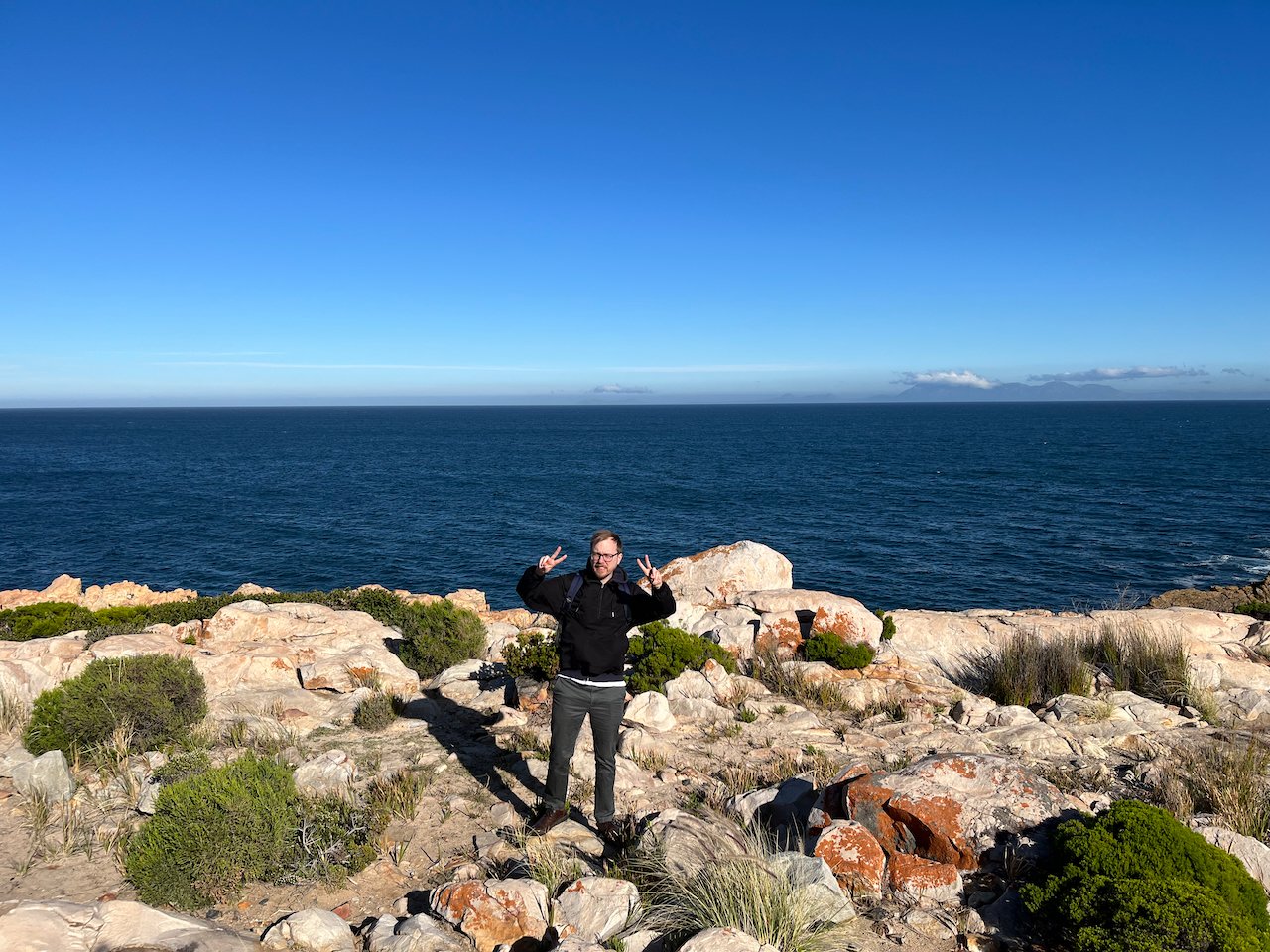
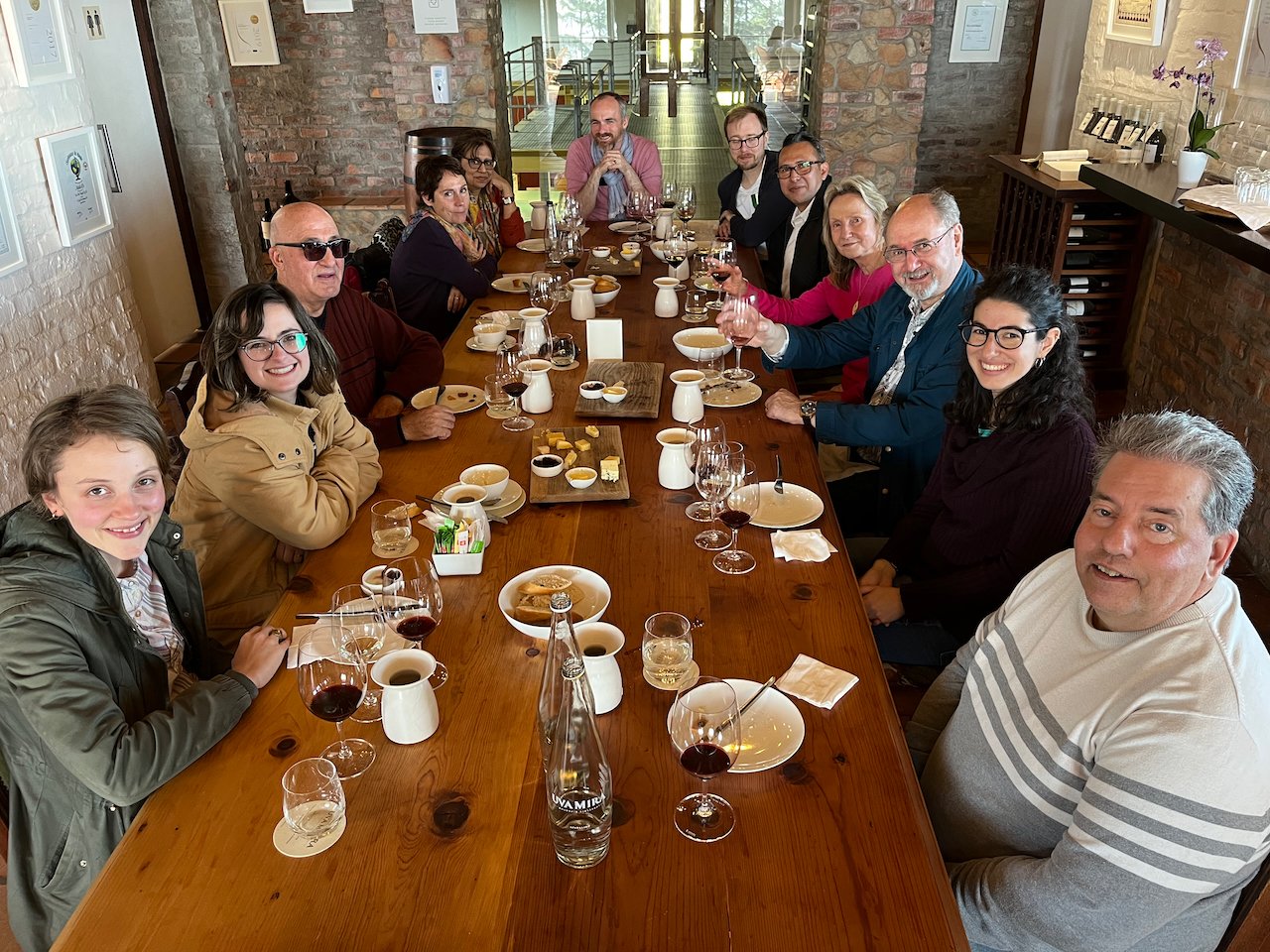
May 24th dawned cold but clear. For those who had arrived the previous day, there was a chance to drive out along the False Bay coast, to drop in on the Drama Factory Ensemble rehearsing scenes from Lekan Balogun’s Olórógun Caesar! and to enjoy the spectacular views and delicious wines at Uva Mira, before heading back to Spier for - of course - #ShakeSpier …

… but there was no time to dwell on further possible bad puns. More delegates joined in as Jessica van Rensburg of the Spier Arts Trust took the group on a walkabout to learn more about the farm’s contested history and Spier’s renowned art collection.

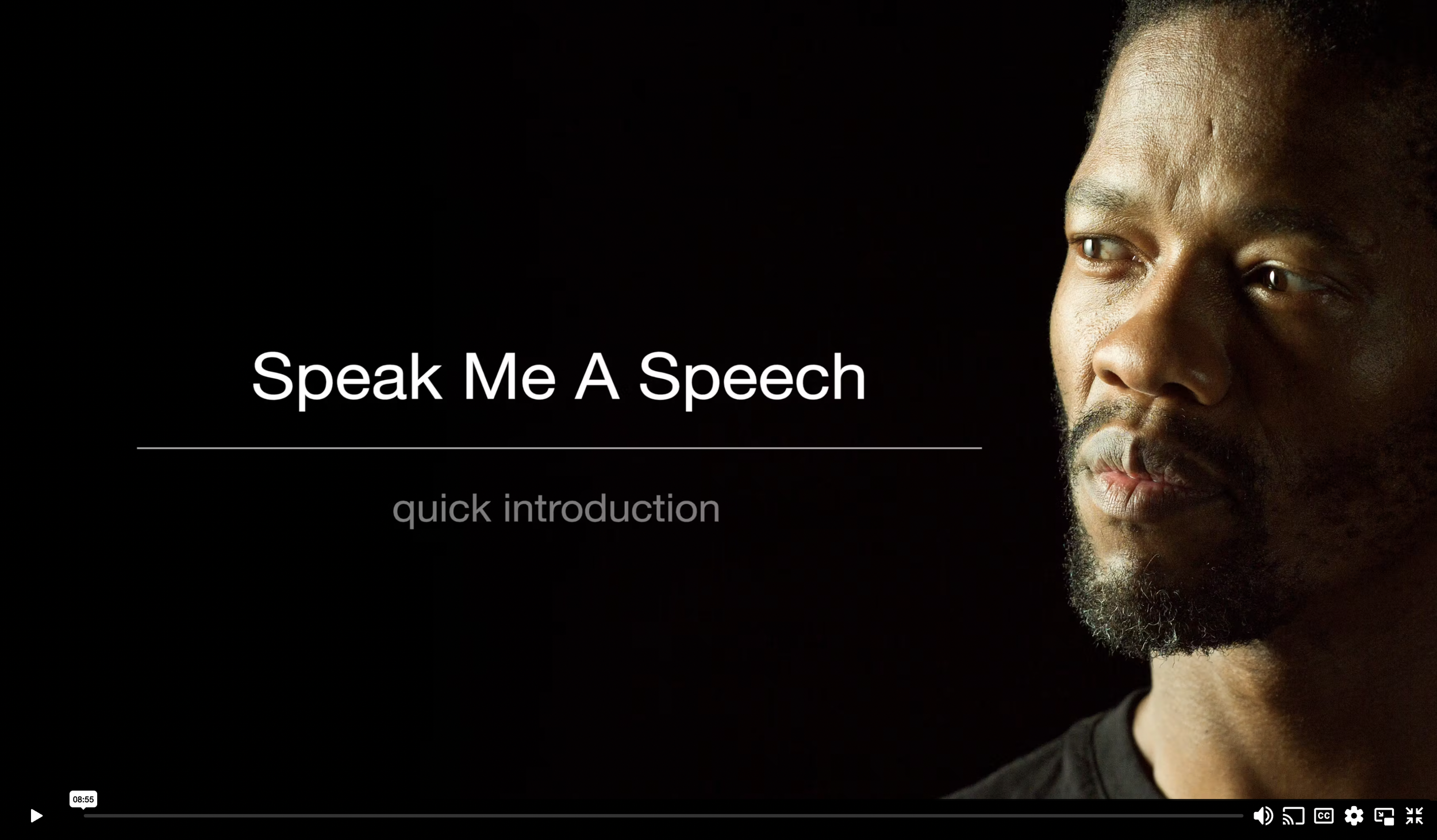
The next stop was Spier’s lovely Riverhouse venue, where the conference was to be held. At the opening cocktail function, convenors Chris Thurman and Sandra Young welcomed delegates and offered some introductory remarks to frame the discussion that would emerge in the days ahead. This was followed by a screening of four short films from the Speak Me A Speech project - an exciting collaboration between CineSouth Studios and the Tsikinya-Chaka Centre that will see dozens of Shakespeare monologues performed in South African languages by some of the country’s best performing artists. Filmmaker Victor van Aswegen was joined by actor-translators Anelisa Phewa and Buhle Ngaba for a panel discussion about the first two speeches in the series. (Watch the second video below for a short introduction to Speak Me A Speech.)


The next morning, the conferencing began in earnest - as did the rain - with Ruben Espinosa delivering the first keynote, “The Way To Dusty Death: Shakespeare and Tomorrow”. The Riverhouse was jam-packed for this riveting talk! (Full videos of the keynote speeches will be available on Shakespeare ZA soon.)

After a short break - the first of many over the next three days - for tea, coffee, Spier’s delicious snacks, chats, more chats and a chance to browse the book table ... it was time for the first panel of papers, “African Shakespeares: History, justice and identity”. Ifeoluwa Aboluwade, Stephen Collins, Marguerite de Waal and Lekan Balogun discussed Shakespearean translations and adaptations in Nigeria, Ghana and South Africa.

Panel 2 was on “The Racialisation of Enslavement, Family, and Lineage in Shakespeare’s Drama”, with Hassana Moosa, Lydia Valentine and Hanh Bui.

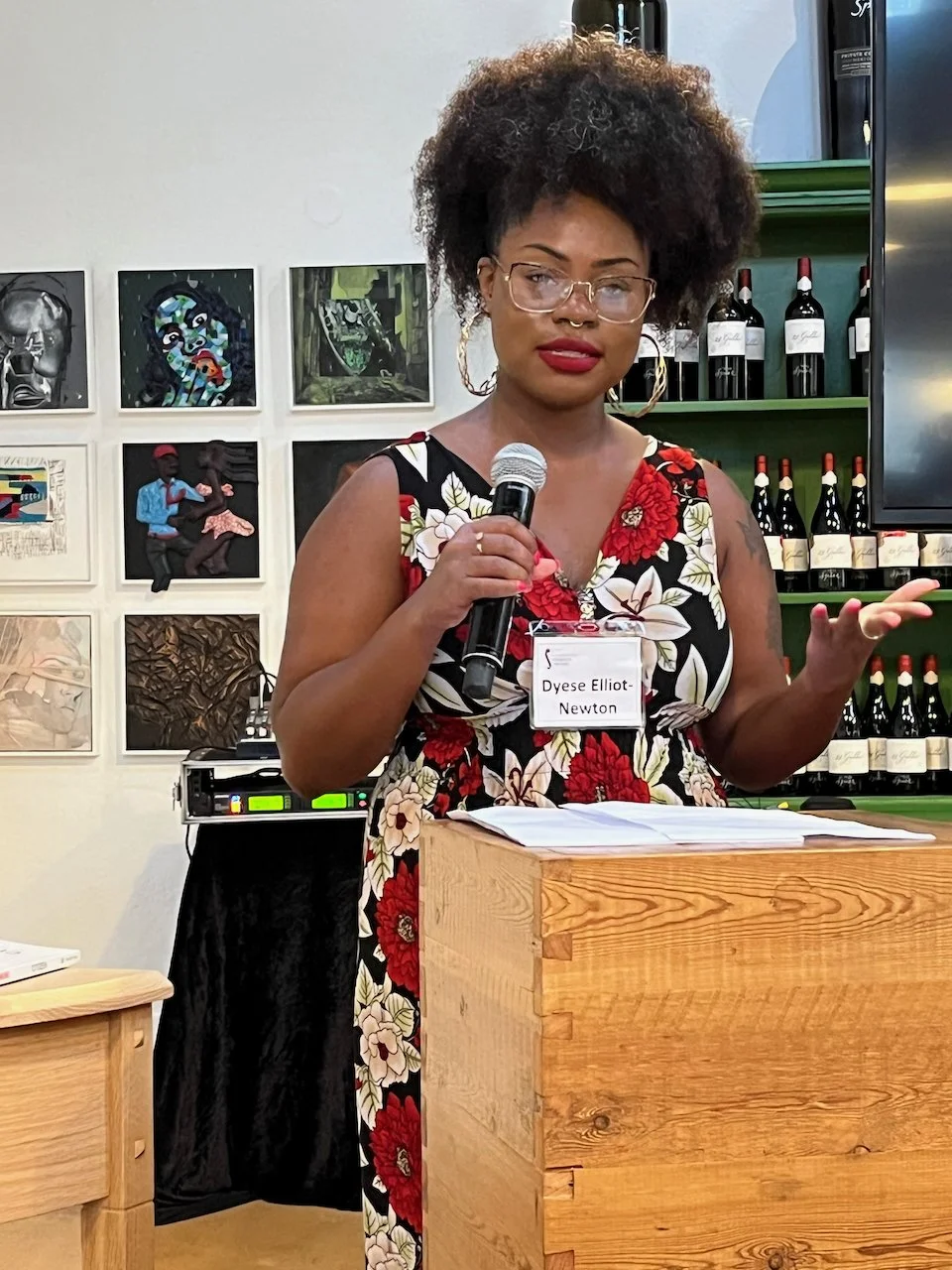
The final panel for the day was “Facilitating Student Engagements with Shakespeare”: Colette Gordon, Marta Fossati, Naomi Nkealah and Dyese Elliott-Newton. In the evening, the conference dinner was held at Spier’s marvellous hotel restaurant - there was much animated conversation until late that night!


Day 3 of the conference started with the second keynote speaker, Jyotsna Singh. Her wonderful talk, “Lyric Voices, Cultural Translations, and Dialogues across Time and Space: William Shakespeare and Faiz Ahmed Faiz (1911-1984)”, was followed by a panel on “Imagining Radical Justice with Shakespeare” featuring Lisa Barksdale-Shaw, Frances Ringwood, Lucy Wylde and Anthony Patricia.

After a break for lunch, Peter Holland, Henry Bell, José Manuel González and Peter Merrington constituted Panel 5: “Travelling (with) Shakespeare”.

Panel 6, “Teaching Shakespeare in South African Schools”, featured Linda Ritchie, Lauren Bates and Kirsten Dey.

After a busy day and yet more business - the Shakespeare Society of Southern Africa’s general meeting - it was time for #ShakeSpierSip, a wine tasting sponsored by Easy Equities and presented by Carel Nolte.


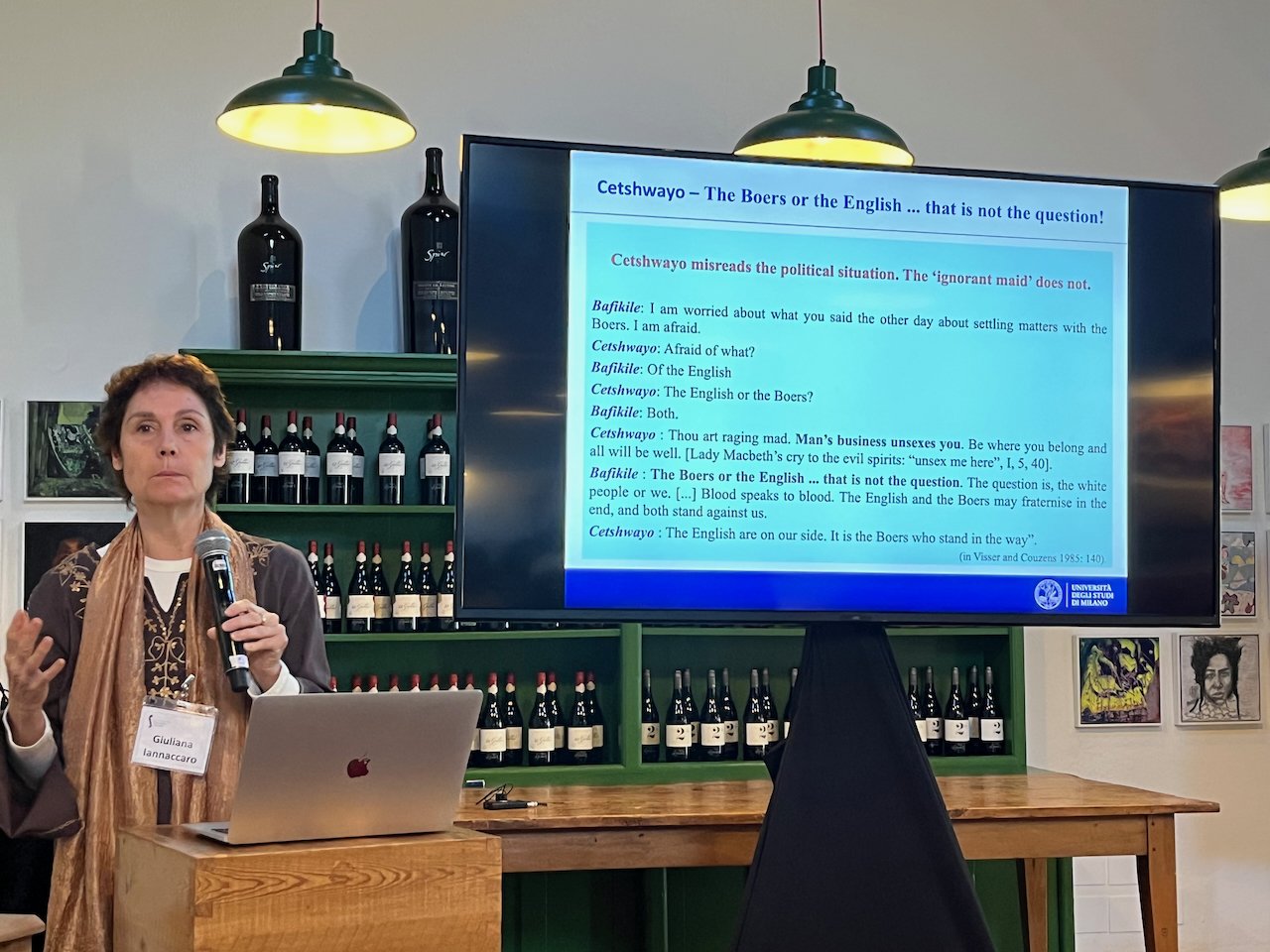
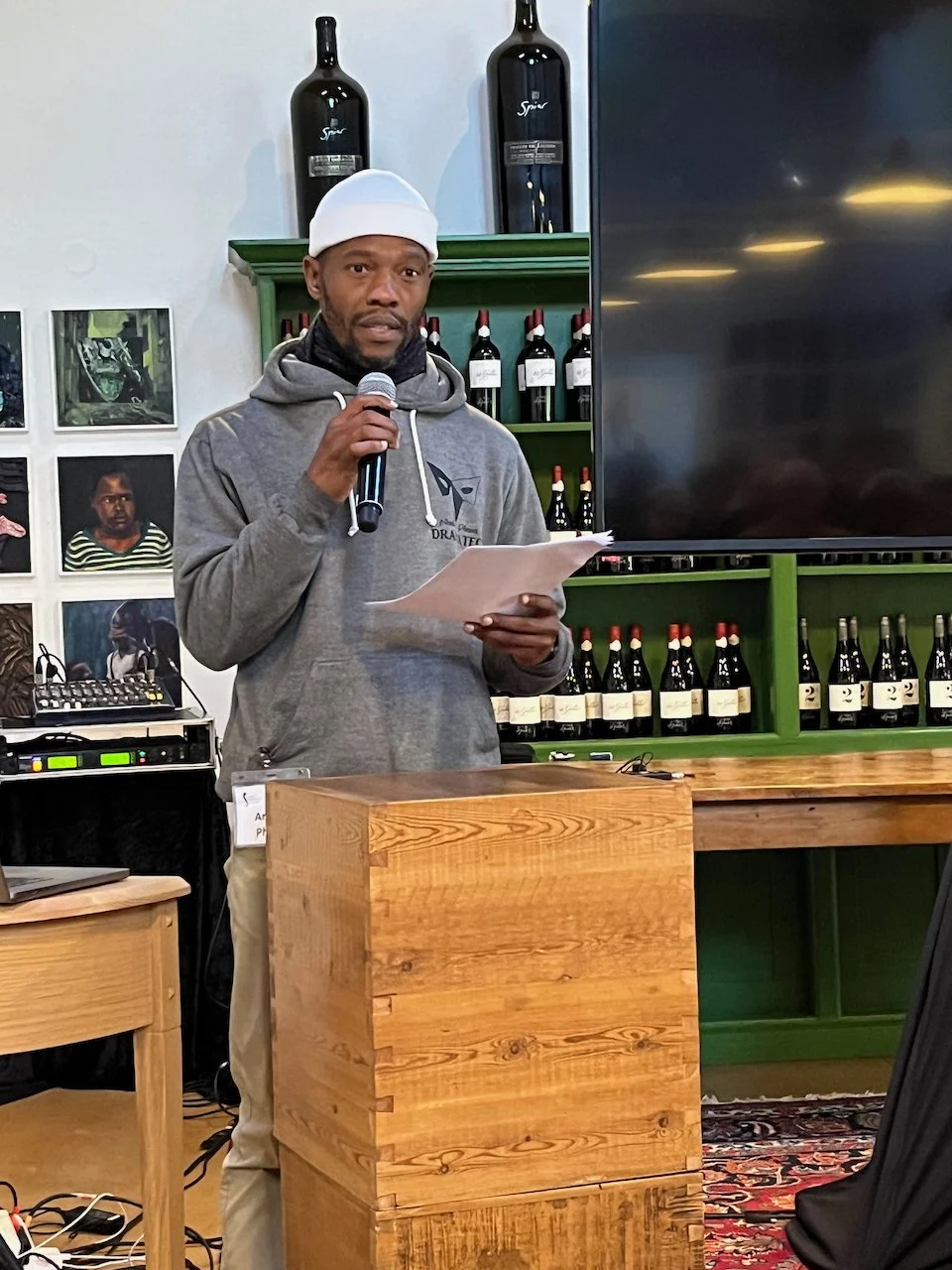
The final day saw delegates braving the cold and wet weather (along with the horror of an early start!). Fortunately the panel on “Translation, appropriation and allusion - versions of Shakespeare in South Africa” made it all worthwhile: Giuliana Iannaccaro, Zwelakhe Mtsaka, John Simango and Anelisa Phewa.

The penultimate panel, “Against an end?”, discussed the production of “Endless Shakespeare” (David Schalkwyk), emphasised “Shakespearean Drama as an End in Itself” (Catherine Addison) and queried the notion of “Travelling Shakespeare” (Laurence Wright).

The title of Panel 9, “Ageing, Death and Life Hereafter”, may have suggested a morbid trajectory, but in fact Geoffrey Haresnape, Fiona Ramsay and Marc Maufort each concluded their papers on an uplifting note.


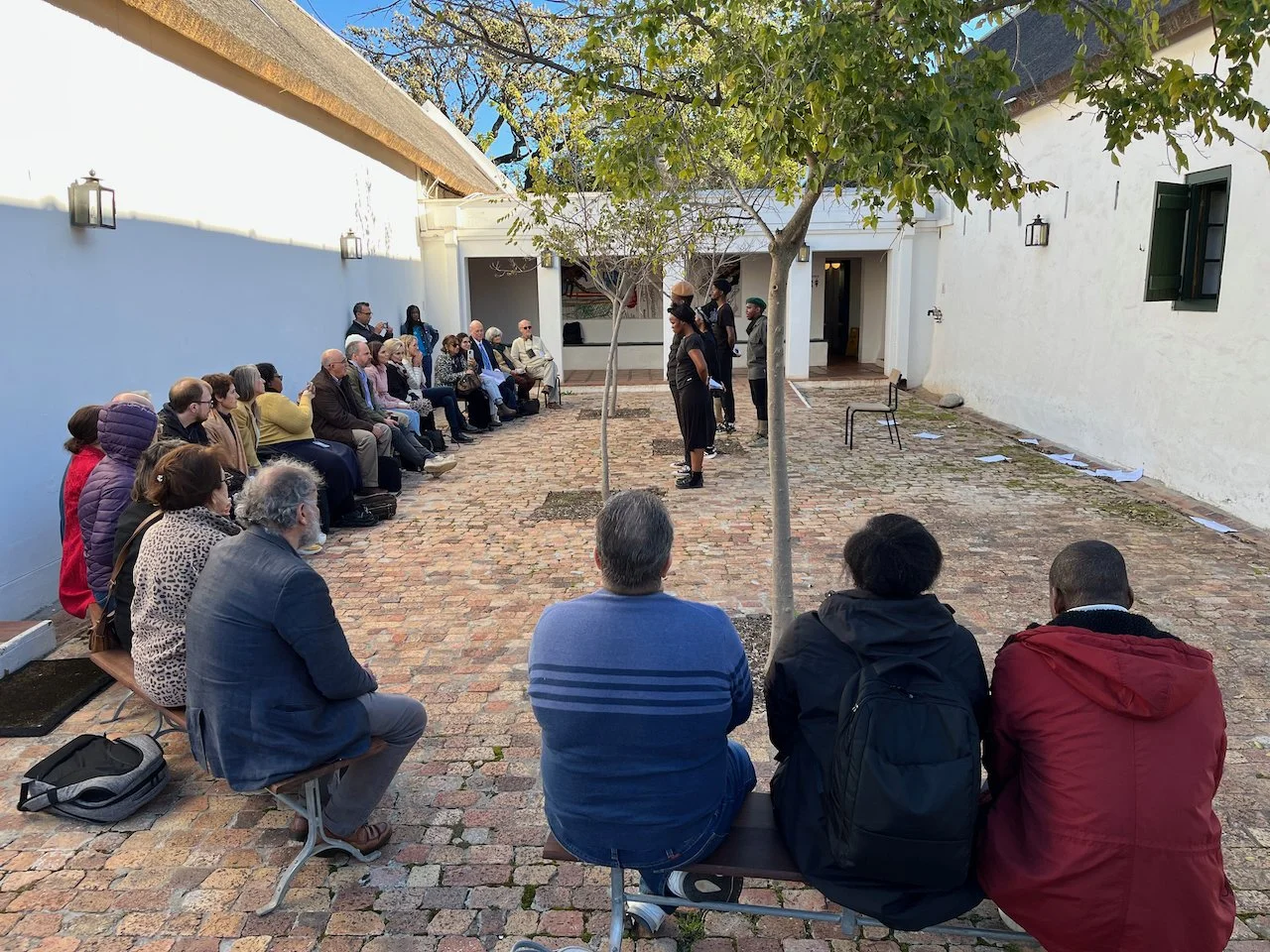
Finally, it was time to bring “Shakespeare Towards An End” to an end - but, fortunately, this occurred in a manner that gestured towards future prospects. The Drama Factory Ensemble (Khanyiso Thakholi, Yamkela Ntendiyo, Sibusiso Maranxa, Mava Silumko, Buhle Sam and Yongisipho Mtimkulu) performed selected scenes from Lekan Balogun’s Olórógun Caesar! Together, Balogun and the cast had workshopped and adapted the material to produce the beginnings of a Nigerian/South African hybrid work.